Root Canal vs. Extraction: When Each Is Better
Posted on 10/5/2026 by SRD Russellville |
 Deciding between a root canal vs. extraction is one of the most common dental dilemmas patients in Russellville face when a tooth becomes badly infected, cracked, or deeply decayed. Both options can solve the immediate problem, but they lead to very different long-term outcomes. A root canal preserves your natural tooth. An extraction removes it and opens up a new question: what comes next. Deciding between a root canal vs. extraction is one of the most common dental dilemmas patients in Russellville face when a tooth becomes badly infected, cracked, or deeply decayed. Both options can solve the immediate problem, but they lead to very different long-term outcomes. A root canal preserves your natural tooth. An extraction removes it and opens up a new question: what comes next.
This article walks through the decision the way our team at Singing River Dentistry thinks about it: when saving the tooth is the better path, when removing it makes more sense, and what to plan for either way. The right answer isn’t a coin flip. It depends on how much of the tooth remains, the health of the surrounding bone and gum, your overall medical picture, and how the tooth fits into your bite and smile. If you’re weighing the choice right now, a thorough exam, a few X-rays, and a frank conversation with your dentist will get you to the right call. Knowing the basics of the root canal procedure before that visit will help you ask sharper questions.
On This Page
Why Saving the Natural Tooth Comes First
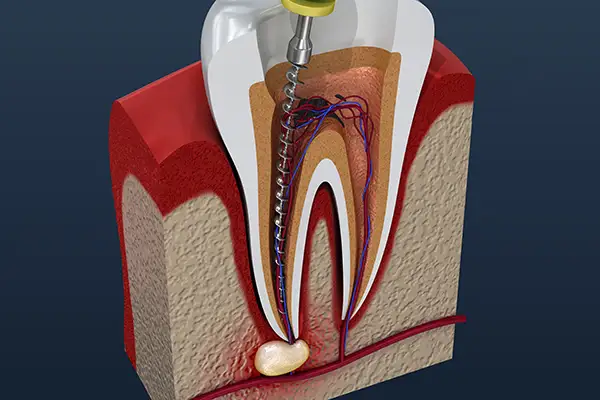 Modern dentistry leans toward saving the natural tooth whenever it’s reasonable to do so. That isn’t a sentimental preference. It’s a recognition that no replacement, however well-made, fully reproduces what a natural tooth contributes to the mouth. Modern dentistry leans toward saving the natural tooth whenever it’s reasonable to do so. That isn’t a sentimental preference. It’s a recognition that no replacement, however well-made, fully reproduces what a natural tooth contributes to the mouth.
Each of your teeth sits in its socket held by a periodontal ligament, a thin layer of tissue that gives the tooth a small amount of natural give and supplies a kind of pressure feedback called proprioception. That feedback is what tells your brain how hard you’re biting into a piece of bread compared to a stalk of celery. A dental implant fuses directly to bone and skips that ligament, which means it doesn’t have the same fine-tuned awareness, even though it functions very well for chewing.
The natural tooth also keeps the surrounding bone stimulated through chewing forces transmitted down the root, and it maintains its relationship with the teeth on either side and above. Pulling a tooth changes those relationships in ways that ripple outward over time. None of this means extraction is wrong when it’s indicated. It means the bar to extract should sit appropriately higher than the bar to save.
When a Root Canal Is the Better Choice
A root canal becomes the better option when the tooth has been compromised by infection or deep decay but the rest of it is still sound enough to function for years to come. The procedure itself removes the inflamed or infected pulp tissue from inside the tooth, cleans and shapes the canal system, and seals it to prevent reinfection.
Enough structure remains to restore. A root canal typically leaves the tooth somewhat hollowed out, so it needs a dental crown afterward to handle the forces of chewing. If a thoughtful exam shows that enough healthy tooth structure remains above and below the gum line for a crown to grip securely, a root canal is usually a strong choice.
Bone and gum support are healthy. A tooth is only as good as what holds it in place. When the periodontal support around a tooth is solid, the long-term outlook after a root canal is generally favorable. When that support has been heavily eroded by gum disease, even a perfectly treated root canal can fail because the foundation isn’t there.
Your overall health supports the procedure. Most patients tolerate root canal therapy comfortably and recover quickly. Certain medical situations can complicate either path, and that’s worth talking through openly during your consultation rather than assuming one option is automatically safer.
The tooth is strategically important. Front teeth carry the smile. First molars do much of the heavy chewing. Teeth that serve as anchors for bridges or partial dentures are difficult to replace without redesigning a larger restoration. When a tooth carries that kind of weight in your mouth, saving it usually pays off.
When Extraction Makes More Sense
 As much as we lean toward saving teeth, there are clear situations where tooth extraction is the more honest answer. Pushing for a root canal on a tooth that can’t be successfully restored only delays the inevitable and adds time and discomfort along the way. As much as we lean toward saving teeth, there are clear situations where tooth extraction is the more honest answer. Pushing for a root canal on a tooth that can’t be successfully restored only delays the inevitable and adds time and discomfort along the way.
Too little tooth remains. When decay or fracture has eaten the tooth down close to or below the gum line, there isn’t enough structure left for a crown to hold onto safely, even after a root canal is performed. A restoration placed under these conditions tends to fail within a few years.
The root has a vertical fracture. A crack that runs vertically down the root can’t be sealed reliably. Bacteria continue to leak in around the fracture line and the tooth keeps reinfecting. Extraction prevents repeated treatment cycles that won’t hold.
Severe periodontal disease has loosened the foundation. If the bone supporting the tooth has been heavily lost to advanced gum disease, treating the inside of the tooth doesn’t fix the outside problem. The tooth will continue to loosen even if the root canal itself is successful.
A previous root canal has failed repeatedly. Endodontic retreatment can rescue some teeth that develop late infections. After more than one failed attempt, however, the cumulative damage often makes extraction the more reliable choice.
Medical considerations weigh heavily. Certain health conditions and medications affect healing and infection risk in ways that change the calculus. In those cases your dentist and physician may agree that removing the source of infection is the safer path.
There’s also an honest comparative question to ask. For some posterior teeth, the long-term performance of a well-placed dental implant meets or exceeds what a heavily compromised tooth can deliver, even with a root canal and crown. Your dentist should be willing to talk through that comparison rather than steering you toward one path automatically.
Planning for Tooth Replacement Before You Decide
The biggest mistake we see after an extraction is treating the empty space as if it’s just an empty space. Once a tooth is gone, the surrounding bone begins to resorb because it no longer has a root to support, the neighboring teeth start to drift toward the gap, and the tooth above or below can begin to over-erupt. Understanding what follows tooth loss is essential context before you decide.
This is why replacement should be part of the conversation at the time you decide to extract, not weeks or months afterward. The three main options each have a place. Implants stimulate the bone the way a natural root does and stand alone without affecting neighboring teeth. A bridge restores chewing and appearance by anchoring to the teeth on either side. Partial dentures restore appearance and some function at a lower upfront commitment.
Choosing extraction without a replacement plan often turns one problem into several and erases any short-term savings. Choosing extraction with a clear plan keeps the rest of your smile stable.
Making the Decision With Your Dentist
A root canal or an extraction is rarely a decision you should have to make on the spot. At our Russellville, AL office, our team at Singing River Dentistry walks patients through the exam findings, the X-ray, and the realistic outlook for each path before recommending anything. Call us at 256-332-6888 or schedule a visit at our Russellville office to get a clear answer for your tooth.
Frequently Asked Questions
How do I know if my tooth needs a root canal or an extraction?
The decision starts with an exam and X-ray, not symptoms alone. Two teeth with identical lingering aches can require very different treatments depending on how much healthy structure remains, the condition of the bone, and whether the root is fractured. If you’re dealing with persistent toothache symptoms, our toothache diagnosis and treatment page explains what we look for during that first visit.
Is a root canal as uncomfortable as people say?
The reputation root canals carry comes from older techniques and from the toothache itself, which is what brings most patients in. With modern anesthesia and instruments, the procedure is usually about as involved as a deep filling. Most patients report that the discomfort they were already feeling improves rather than worsens after treatment.
How long does a tooth last after a root canal?
Many root-canal-treated teeth last for decades when the tooth is sealed promptly with a crown and the surrounding gum and bone stay healthy. Long-term outcomes depend less on the root canal itself and more on whether the final restoration is placed in a timely manner and on how well the tooth is maintained at home and at routine cleanings.
Can I just leave the space empty after an extraction?
You can, but the surrounding teeth and bone don’t stay still. Neighboring teeth tend to drift, the opposing tooth can over-erupt, and the bone in the area shrinks. Even a back tooth nobody sees can cause bite problems over time when it isn’t replaced, so we include the replacement plan in the extraction discussion from the start.
What happens if I delay the decision?
Postponing treatment on a tooth with infection or deep decay almost never makes the situation simpler. Infection can spread into the surrounding bone, a tooth that could have been saved with a root canal can become unrestorable, and discomfort generally returns more sharply. Getting an honest assessment early keeps more options on the table.
|
|

