Why Replacing Missing Teeth Matters for Your Jaw Health
Posted on 11/6/2026 by SRD Russellville |
 Many patients in Russellville view a missing back tooth as a cosmetic issue they can put off addressing, but missing teeth affect your jaw health in ways that begin almost immediately and continue for the rest of your life if the gap isn’t handled. The visible part of the smile is only the most obvious piece. Beneath the gum line, your jawbone is a living tissue that depends on the presence of tooth roots to stay healthy and dense.
This article walks through what actually happens after a tooth comes out, why the timing of replacement matters more than most people realize, and how different replacement options compare when you take bone preservation seriously. If you’ve already lost a tooth or you’re facing an extraction, understanding what follows tooth loss now will help you make a better decision about what comes next. The encouraging side of this is that the right plan, started promptly, keeps the rest of your smile stable for the long term.
On This Page
How Your Jawbone Depends on Your Teeth
 Your jawbone isn’t a static structure. It’s remodeling itself constantly throughout your life in response to the forces it experiences. Every time you bite into something, chewing forces travel down through your teeth, into the roots, and into the surrounding bone. The bone reads those forces as a signal: this area is being used, keep maintaining it.
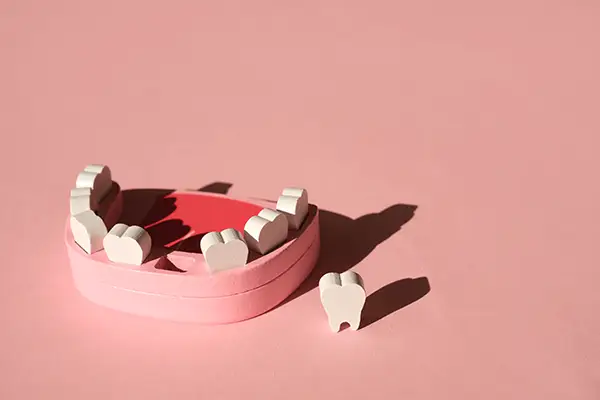
When a tooth is removed, that signal stops. The body, which is efficient about not maintaining tissue that no longer has a job, begins to resorb the bone in that area. The process starts within weeks of the extraction. Research has documented that the alveolar ridge in the area of a missing tooth can lose roughly a quarter of its width within the first year, and continues to lose some volume in the years that follow.
This isn’t a fast collapse. It’s a slow, steady reduction that often goes unnoticed until something else makes it visible: difficulty fitting a future implant, a partial denture that stops fitting well, or a subtle change in facial shape. The earlier you address the gap with a plan that stimulates the bone, the more of that bone you preserve.
What Happens When You Leave a Gap
Once a tooth is gone, the rest of your mouth starts compensating in ways that quietly create new problems.
Adjacent teeth begin to drift. The neighboring teeth lean toward the gap because they no longer have anything supporting them on that side. This drift creates angled spaces that trap food and become difficult to clean, raising the risk of decay and gum disease in teeth that were previously healthy.
The opposing tooth over-erupts. A tooth in your upper jaw is normally held in place partly by contact with the tooth below it during chewing. When that contact disappears, the upper tooth gradually moves downward into the empty space. Over months and years, it can extrude far enough to expose root surfaces, develop sensitivity, or interfere with future replacement.
Your bite changes. The combined drift and over-eruption changes how your teeth fit together. Patients often notice it as uneven wear on other teeth, jaw soreness, headaches near the temples, or the sense that chewing has shifted predominantly to one side of the mouth.
The face begins to change shape. A single missing back tooth usually doesn’t change how you look. Multiple missing teeth, especially in the same area, can lead to a sunken or aged appearance long before any denture is needed. The lower face shortens slightly as the bone supporting the lips and cheeks recedes.
Future replacement becomes harder. A patient who waits five or ten years to address a missing tooth often discovers that there isn’t enough bone left to place an implant directly. Bone grafting becomes part of the conversation. The treatment that would have been straightforward earlier now requires an additional procedure and more time.
How Each Replacement Option Affects the Bone
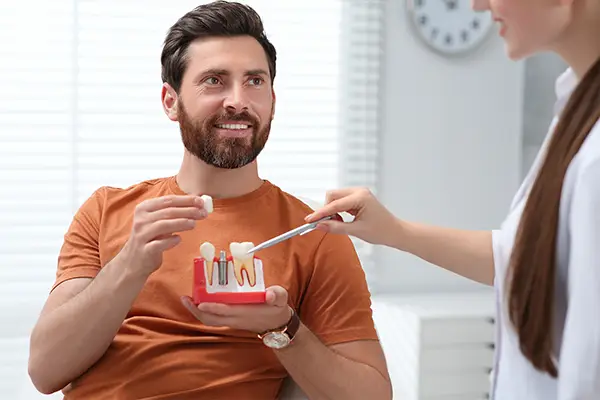 Not all replacement options interact with the jawbone the same way. The one you choose depends on your specific situation, budget, and goals, but it helps to understand what each does for the bone underneath.
Dental implants. A dental implant is the only replacement that stimulates the bone the way a natural root does. The titanium post fuses with the surrounding bone through a process called osseointegration, and once integrated, it transmits chewing forces down into the jaw much as a tooth root would. This is why implants are the option dentists routinely recommend when bone preservation is a priority.
Dental bridges. A dental bridge restores chewing function and appearance by anchoring a replacement tooth to crowns on the teeth on either side of the gap. It looks and works well, and it prevents adjacent teeth from drifting. What it doesn’t do is stimulate the bone directly under the missing tooth, so resorption in that specific spot continues even with a bridge in place.
Partial dentures. Partial dentures restore appearance and a degree of function at a lower upfront investment. They rest on the gums and clasp onto remaining teeth. They’re a reasonable option in many situations, especially when several teeth need replacing, but they provide little direct stimulation to the underlying bone.
For patients missing several teeth in the same arch, implant-supported dentures combine the bone-preserving benefits of implants with the broader coverage of a denture, offering a middle path that suits many situations. The right combination depends on which teeth are missing, the condition of the remaining bone, and what you want your replacement to feel like day to day.
The Best Time to Replace a Missing Tooth
The honest answer is that the best window to replace a missing tooth is shortly after it’s gone, not years later. At Singing River Dentistry, our team walks patients through their options and what each one means for long-term jaw health in Russellville, AL. Call us at 256-332-6888 or schedule a visit at our Russellville office and we’ll help you build a plan that fits your situation.
Frequently Asked Questions
How soon after losing a tooth should I plan a replacement?
Most of the early bone change happens in the first six to twelve months, so starting the replacement conversation within the first few months gives you the most flexibility. That doesn’t always mean placing an implant immediately. It often means making the plan, allowing the extraction site to heal, and then proceeding while there’s still adequate bone to work with.
Can bone loss be reversed once it has started?
Existing bone loss doesn’t reverse on its own, but it can be addressed surgically. Bone grafting rebuilds the volume needed to support a replacement, and once an implant is placed, the bone in that area stops resorbing because it’s being stimulated again. The way implants help prevent bone loss is one of the strongest arguments for choosing them when feasible.
Do I really need to replace a back tooth nobody can see?
Yes. The bone changes and bite shifts that follow a missing tooth don’t depend on whether the gap is visible when you smile. A missing molar can cause as much downstream change as a missing front tooth, sometimes more, because back teeth carry most of the chewing load.
Is bone grafting always required for implants?
Not always. When implants are placed soon after extraction, many patients have enough remaining bone for the implant to be placed without additional grafting. When years have passed since the tooth was lost, the bone often needs to be rebuilt first. Earlier action generally means simpler treatment.
What if I can’t commit to a permanent replacement right away?
Interim solutions exist. A flipper, a temporary bridge, or a partial denture can keep the space functional while you plan. None of these directly preserve bone, but they keep neighboring teeth from drifting and give you time to build toward a long-term plan that works for your budget and goals.
|
|

