How to Prevent Cavities in Back Molars
Posted on 7/5/2026 by SRD Russellville |
 If you brush twice a day and still keep finding cavities in your back molars, you’re not imagining the pattern. Learning how to prevent cavities in back molars takes more than just good brushing because these teeth are the hardest in the mouth to keep clean. The deep grooves on the chewing surfaces trap food and bacteria that a toothbrush can’t fully reach, the cheek tissue gets in the way during cleaning, and even diligent brushers tend to rush the final few seconds where the last molars sit. If you brush twice a day and still keep finding cavities in your back molars, you’re not imagining the pattern. Learning how to prevent cavities in back molars takes more than just good brushing because these teeth are the hardest in the mouth to keep clean. The deep grooves on the chewing surfaces trap food and bacteria that a toothbrush can’t fully reach, the cheek tissue gets in the way during cleaning, and even diligent brushers tend to rush the final few seconds where the last molars sit.
The good news is that targeted prevention works. At our Russellville office, we walk patients through the same strategies our team uses to protect cavity-prone molars, from sealants to brushing technique to fluoride sources and smarter snack timing. If you keep finding cavities in the same back teeth, sharpening your overall oral hygiene approach may be the most useful next step. This guide walks through what genuinely helps, in order of impact.
On This Page
Why Back Molars Are So Cavity-Prone
The back molars do most of the heavy chewing in your mouth, and their anatomy reflects that job. Their broad chewing surfaces are covered in a network of deep grooves and pits called fissures, which give the molars more surface area to crush food. The same grooves that make chewing efficient also trap food particles and bacteria in spaces narrower than a single toothbrush bristle. No amount of brushing fully cleans those grooves out, which is why decay tends to start in those exact spots.
Position adds to the problem. The last molar in each quadrant sits tight against the cheek and the back of the jaw. When you brush, your cheek pushes in and your toothbrush has limited room to angle correctly. Most people brush the front teeth carefully and then rush past the back, so the outside surface of the last molar often gets the least time of any tooth in the mouth. The result is a surface that’s already hard to clean getting the shortest cleaning of all.
Saliva chemistry also plays a quiet role. Some people produce saliva that buffers acid effectively and remineralizes enamel quickly. Others have saliva that struggles to keep up with the acid bath created by sugary or starchy foods. If you’ve always seemed unusually cavity-prone despite good habits, biology is likely part of the picture, and prevention has to be tailored to that reality.
Dental Sealants for Back Molars
Of all the prevention strategies for back molars, dental sealants are the most targeted. A sealant is a thin protective coating painted onto the chewing surface of a molar. It flows into the deep grooves where bacteria settle and hardens into a smooth barrier that bacteria can no longer hide in. The teeth become much easier to clean because food simply doesn’t lodge in those pits anymore.
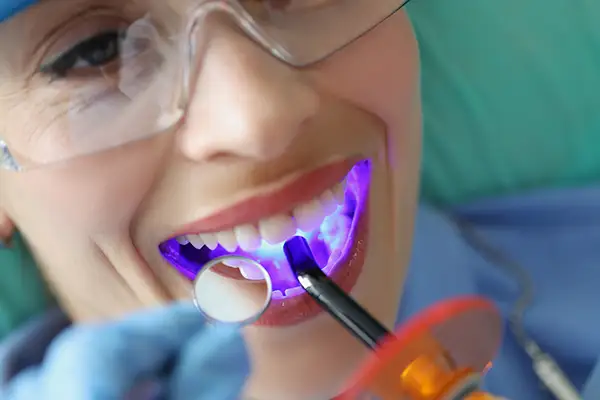
Sealants are most often associated with children and teens whose newly erupted permanent molars are particularly cavity-prone, but the principle works at any age. We see plenty of adults who get cavity after cavity in the same molars and benefit from having sealants placed on the remaining unrestored surfaces. The procedure is quick and non-invasive: the tooth is cleaned and dried, a mild conditioning gel is applied for a few seconds and rinsed off, the sealant material is painted on, and a curing light hardens it in seconds. There’s no numbing, no shaping of the tooth, and no removal of healthy tooth structure.
A sealed molar isn’t bulletproof, but the protection makes a real difference, especially when paired with good daily habits. Sealants do wear over time and need to be checked at routine visits so any thin or chipped spots can be touched up. For a cavity-prone mouth, that periodic check is a small price for the level of protection sealants offer.
How to Brush and Floss the Back of Your Mouth
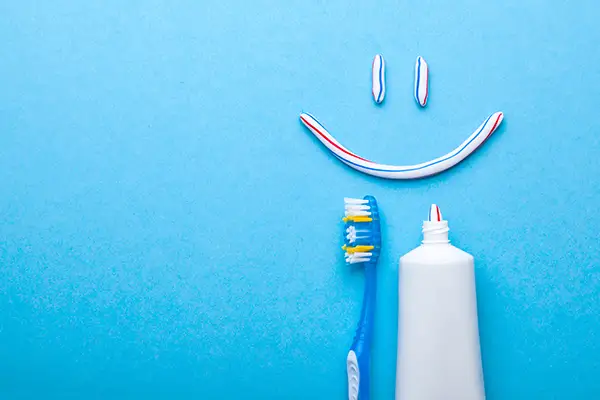 Daily home care is where most molar protection is won or lost. The trick with back molars is angling your toothbrush so the bristles actually contact the surfaces that matter, not just the parts of the tooth that feel easy to reach. Daily home care is where most molar protection is won or lost. The trick with back molars is angling your toothbrush so the bristles actually contact the surfaces that matter, not just the parts of the tooth that feel easy to reach.
For the chewing surface, point the bristles straight down into the grooves and use small back-and-forth motions to work the bristles into the pits. For the inside surface (the tongue side), angle the brush toward the gum line at about 45 degrees and use short, gentle strokes. For the cheek side of the very last molar, the move most people miss is reaching from behind the tooth rather than from the side. Open wide, push the cheek out of the way with a finger if needed, and brush the back of that final molar like you would the front of any other tooth. A toothbrush with a smaller head, sometimes labeled compact, can also make this easier.
Don’t skim past the last 30 seconds of brushing. Most people slow down at the start and speed up at the end, so the back molars systematically get less attention. A two-minute timer or a powered toothbrush with a built-in timer helps even out the time across every tooth.
Flossing the Back Side of the Last Molar
The back side of your last molar has no neighboring tooth to share its surface with, which means most people never floss that surface at all. Plaque and food can build up there for years. To clean it, wrap the floss around that back surface like you would around any other tooth, then move the floss up and down against the tooth a few times to scrape it clean. Floss picks make this easier for people who find it awkward with traditional floss.
If flossing is a struggle, a complete daily oral care routine can include a water flosser or interdental brushes to help clean those tight back spaces. The right tool is the one you’ll actually use every day.
Fluoride and Smart Snacking Habits
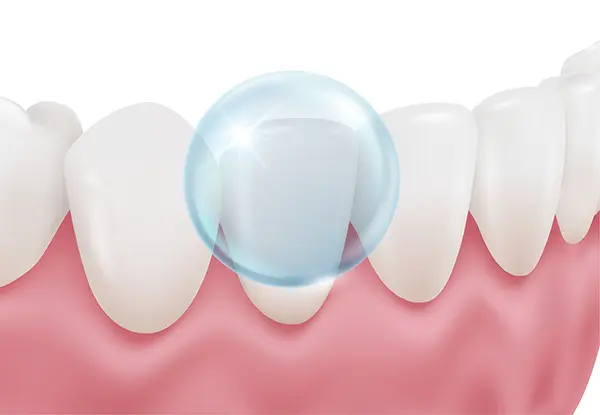 Fluoride strengthens the outer enamel layer and helps the tooth resist acid attacks. For everyday protection, a fluoride toothpaste used twice a day is the foundation. Avoid rinsing aggressively with water immediately after brushing if you can stand it, since a thin film of toothpaste left on the teeth keeps fluoride in contact with the enamel longer. Fluoride strengthens the outer enamel layer and helps the tooth resist acid attacks. For everyday protection, a fluoride toothpaste used twice a day is the foundation. Avoid rinsing aggressively with water immediately after brushing if you can stand it, since a thin film of toothpaste left on the teeth keeps fluoride in contact with the enamel longer.
At higher cavity risk, a professional fluoride treatment applied at your cleaning visit can add another layer of protection. Fluoride varnish dries quickly to a clear film and continues releasing fluoride over the following hours. For patients with a steady history of new cavities, a prescription-strength fluoride toothpaste or a daily fluoride rinse may also be worth discussing.
Snacking patterns matter more than most people expect. It’s not just what you eat. It’s how often. Every time you eat or drink something with sugar or refined carbohydrates, the bacteria on your teeth produce acid for about 20 minutes afterward. If you graze on snacks and sip sweetened drinks throughout the day, your teeth never get out of that acid-attack window long enough for saliva to repair the surface. Structured snack times, water between meals, and saving sweet drinks for mealtimes give your enamel breathing room.
How Check-Ups and X-Rays Catch Cavities Early
Even with great habits, some cavities start in places you can’t see or feel. The contact points between back molars, where one tooth touches the next, are hidden from a visual exam and from a toothbrush, but they show up clearly on a bitewing X-ray. Catching a cavity at that early stage means a smaller, simpler filling rather than a deeper restoration later.
A routine dental exam is where this catch happens. Our team checks the chewing surfaces with a mirror and explorer, evaluates any existing sealants for wear, looks for early signs of demineralization, and reviews X-rays for hidden decay between teeth. Patients who are at higher risk may benefit from more frequent visits, and your dental team can help decide on a schedule that fits your history.
When Extra Prevention Makes Sense
If you keep getting cavities in your back molars despite doing everything right, it’s worth a longer conversation about why and what else can help. At Singing River Dentistry, our Russellville team will walk you through a personalized prevention plan that may include sealants, fluoride options, hygiene tools, and a snacking review. Call us at 256-332-6888 or schedule a visit at our Russellville office to put a stronger prevention plan in place.
Frequently Asked Questions
Can adults get dental sealants?
Yes. While sealants are most commonly placed on children’s newly erupted permanent molars, adults with cavity-prone teeth and deep grooves can benefit too. If you have a history of repeated decay in the same back teeth, ask whether sealing the remaining unrestored surfaces could help. A quick check at your next visit is the easiest way to find out.
How long do dental sealants last?
A well-placed sealant can last many years, often around five years or longer, with some sealants holding up for a decade when well-maintained. They do wear gradually with chewing, so your dental team checks them at each cleaning visit and touches up any spots that have chipped or worn through. The combination of an intact sealant plus daily brushing offers excellent protection against decay on chewing surfaces.
Why do I keep getting cavities even though I brush well?
Brushing is essential but it’s only one piece of the puzzle. Tooth anatomy, saliva chemistry, snacking patterns, fluoride exposure, and flossing habits all influence cavity risk. If you’re cavity-prone despite good brushing, the answer is usually a combination of factors, and a personalized prevention plan will go further than working harder at one habit.
Are X-rays really necessary for cavity detection?
For decay between teeth, yes. The contact points between molars are not visible during a regular exam, and the surfaces touch closely enough that even a small cavity can stay hidden until it’s already deep. Modern digital X-rays use very low radiation doses and let your team catch hidden decay early, which usually means a smaller, simpler dental filling when treatment is needed.
Does flossing really prevent cavities in the back?
Yes, particularly on the surfaces between molars where a toothbrush cannot reach. Daily flossing removes the plaque film that builds up between teeth and at the gum line, which is exactly where many adult cavities form. If traditional floss is difficult to maneuver around the back molars, a water flosser or floss picks are reasonable alternatives.
|
|

