The Most Common Dental Issues in Teens (And How to Prevent Them)
Posted on 11/6/2025 by SRD Russellville |
 The most common dental issues in teens cluster around a few predictable causes: energy drinks, brackets and aligners, late-erupting wisdom teeth, sports injuries, and a newer concern most parents weren’t worrying about a decade ago. The teenage years bring a unique mix of dental challenges that simply did not exist during the elementary school years, and the patterns we see at our Russellville office line up closely with what families are dealing with at home. The most common dental issues in teens cluster around a few predictable causes: energy drinks, brackets and aligners, late-erupting wisdom teeth, sports injuries, and a newer concern most parents weren’t worrying about a decade ago. The teenage years bring a unique mix of dental challenges that simply did not exist during the elementary school years, and the patterns we see at our Russellville office line up closely with what families are dealing with at home.
This is partly biology and partly lifestyle. New permanent teeth are still maturing, the third molars start to develop, and at the same time teens take more independence over snacking, drinks, and daily oral care. Many are also in orthodontic treatment, which adds its own complications. The good news is that most of the problems on this list are highly preventable when teens, parents, and the dental team are paying attention to the same things.
Below are the most common dental issues we see in teens at our pediatric and teen dental care visits, why each one shows up, and the prevention strategies that actually work for this age group.
On This Page
Why the Teen Years Bring New Issues
Permanent teeth in a teenager are not the same as the permanent teeth in an adult, even though they look identical from the outside. Newly erupted teeth take roughly two to three years to fully mineralize after they come into the mouth. During that window the enamel is more porous and more vulnerable to decay and erosion. Combine that with the dietary and lifestyle changes that come with middle and high school, and a previously cavity-free kid can suddenly start showing up with multiple small cavities at routine visits.
There is also a behavioral shift. Younger kids brush with a parent watching. Teens brush alone, sometimes quickly, sometimes not at all on a tired night. They start drinking coffee, sports drinks, and energy drinks. Many begin orthodontic treatment, and brushing around brackets is genuinely harder than brushing without them. None of this is a moral failing. It is a normal developmental window where the dental risks shift, and the prevention strategy has to shift with it.
Cavities Around Molars and Brackets
The most common single issue we see in teens is new cavities on the chewing surfaces of back molars and around orthodontic brackets. The grooves of back molars are deep and trap food and bacteria. Brackets and wires add dozens of new spots where plaque can hide, and the cheek and lips often push food into those spaces during meals.
Three preventive measures meaningfully reduce this risk. The first is dental sealants, thin protective coatings applied to the grooves of back molars. Sealants are often associated with elementary-age kids, but they are equally valuable when the second molars erupt around age 12, and we will sometimes place them on teens who never got them earlier. The second is professional fluoride treatment at cleanings, which strengthens the enamel of newly erupted teeth that are still mineralizing. The third is modifying the snacking pattern. Constant sipping and grazing keep the mouth in an acidic state, while structured meals and snacks let saliva neutralize between exposures. This second factor is often more important than total sugar intake.
Erosion From Sports and Energy Drinks
Energy drinks, sports drinks, sodas, and even some flavored sparkling waters are highly acidic. Unlike a cavity, which is caused by bacteria converting sugar into acid, erosion happens when acidic beverages dissolve enamel directly. The warning signs we see in teens are white spots along the front of the upper teeth, increasing cold sensitivity, and a slightly translucent or rounded appearance at the edges of the front teeth.
The drink pattern matters as much as the volume. A sports drink consumed in fifteen minutes during a workout is far less damaging than the same drink sipped slowly across two hours of homework. Encouraging your teen to drink water during the day and reserve sports or energy drinks for specific times, then rinse with water afterward, can dramatically reduce the impact. Waiting at least thirty minutes after an acidic drink before brushing also helps, because brushing softened enamel can accelerate the wear.
Wisdom Teeth and Orthodontics
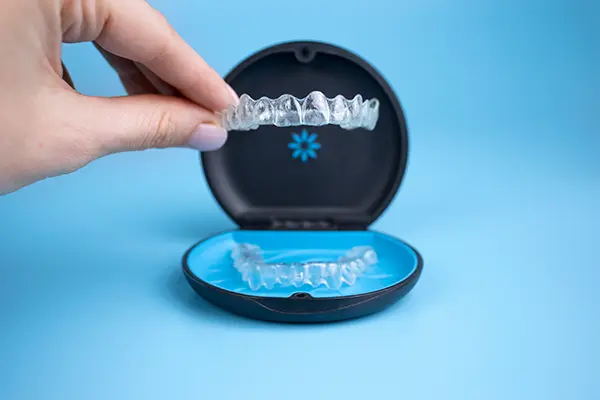 Two big developmental changes show up during the teen years: the third molars continue their development, and crowding or alignment issues become more visible. Both deserve attention. Two big developmental changes show up during the teen years: the third molars continue their development, and crowding or alignment issues become more visible. Both deserve attention.
Wisdom teeth continue developing in the jaw during the teen years and typically erupt in the late teens or early twenties. Many will not have enough room and may need wisdom teeth extraction. We monitor their position through panoramic imaging at routine visits, which lets us see how they are oriented and whether early planning is worthwhile.
On the orthodontic side, many teens are excellent candidates for Invisalign clear aligners, which appeal to teens who want a less visible option than traditional brackets. The decision depends on the case and on whether your teen will reliably wear the aligners for 20 to 22 hours per day. We talk through both routes during a consultation rather than pushing one option over another.
Sports Injuries and Vaping
 Two final issues round out the list, and they could not be more different from each other. The first is sports injuries. A chipped or knocked-out tooth during a basketball, soccer, or football season is one of the most common dental emergencies we treat in this age group. Off-the-shelf boil-and-bite mouth guards provide some protection, but a custom sports mouth guard fits better, stays in place better, and offers significantly more impact protection. Our sports dentistry team can fit one in a single visit. Two final issues round out the list, and they could not be more different from each other. The first is sports injuries. A chipped or knocked-out tooth during a basketball, soccer, or football season is one of the most common dental emergencies we treat in this age group. Off-the-shelf boil-and-bite mouth guards provide some protection, but a custom sports mouth guard fits better, stays in place better, and offers significantly more impact protection. Our sports dentistry team can fit one in a single visit.
The second is vaping. Unlike traditional cigarettes, vaping has been marketed as a safer alternative, and many teens started without realizing the oral health implications. The aerosolized chemicals reduce saliva flow, irritate gum tissue, and contribute to gum recession and decay in patterns we did not see ten years ago. If your teen vapes, the most useful thing you can do is acknowledge it without judgment and have us look for the early signs at routine visits. Catching gum changes early matters, regardless of the cause.
Helping Your Teen Build Habits
If your teen is heading into the orthodontic years, getting more independent with snacks and drinks, or just due for an exam, our team at Singing River Dentistry in Russellville, AL is happy to be a steady presence in that part of their life. Call our office at 256-332-6888 or visit our Russellville home page to schedule a visit, and we will tailor the conversation to the specific risks at this age, not a generic cleaning script.
Frequently Asked Questions
At what age should my teen start handling dental visits on their own?
There is no fixed age, but many teens are comfortable being in the operatory alone by their mid-teens. We are happy to talk through findings with the teen first and then loop the parent in afterward, or keep the parent involved the whole time. Whatever helps your teen build comfort and ownership is the right approach.
Should my teen get sealants if they didn’t get them as a younger child?
Often, yes. Sealants are most valuable when the molars are newly erupted and cavity-free, which means the second molars that erupt around age 12 are great candidates. We evaluate each tooth individually at routine visits and recommend sealants only where they will genuinely help.
Is vaping really worse for teeth than smoking?
It is not necessarily worse than smoking, but the framing of vaping as harmless is misleading. The aerosols reduce saliva, irritate gum tissue, and have been associated with patterns of gum recession and decay in teens. Both smoking and vaping carry real oral health risks.
Will sports drinks ruin my teen’s teeth?
They can cause real enamel erosion when consumed frequently or sipped slowly over long periods. The damage is dose- and pattern-dependent, so a sports drink during an actual workout is far less harmful than the same drink sipped during homework. Water is always the better default, and rinsing with water after a sports drink helps.
How do I get my teen to actually floss?
Honestly, the format matters more than the lecture. Many teens will not use string floss but will use a water flosser or floss picks, both of which are effective when used consistently. Pairing it with an existing routine like showering or before-bed phone time also helps the habit stick.
|
|

