Early Signs of Gum Disease You Shouldn't Ignore
Posted on 10/5/2025 by SRD Russellville |
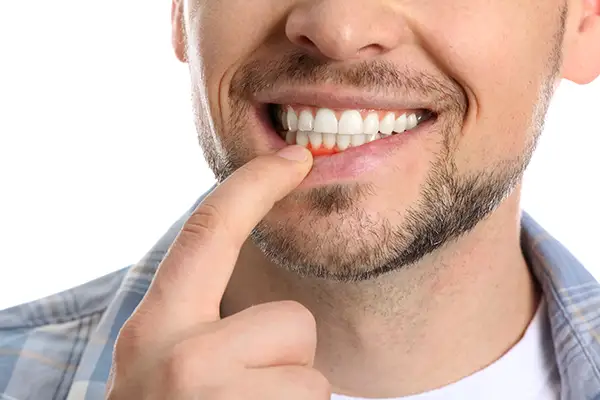 The early signs of gum disease are easy to dismiss until they aren’t. A little pink in the sink after brushing, slightly puffy gums, a hint of bad breath that mouthwash never quite fixes – these warning signs of gingivitis often get written off as normal. But catching gum problems in the earliest stage is the single biggest difference between a fully reversible condition and one that quietly damages the bone supporting your teeth for the rest of your life. The early signs of gum disease are easy to dismiss until they aren’t. A little pink in the sink after brushing, slightly puffy gums, a hint of bad breath that mouthwash never quite fixes – these warning signs of gingivitis often get written off as normal. But catching gum problems in the earliest stage is the single biggest difference between a fully reversible condition and one that quietly damages the bone supporting your teeth for the rest of your life.
At our Russellville office, we see this pattern often. Patients come in for a routine cleaning and learn they have early gum inflammation that has been there for months. The encouraging news is that gingivitis, the earliest stage of gum disease, can almost always be turned around with a professional dental cleaning and some changes to home care. The harder truth is that once gingivitis progresses to periodontitis, the lost bone and tissue around your teeth does not come back.
This guide walks through the early signs most people miss, what is actually happening in your gum tissue, and the steps you can take at home and during your periodontal care visits to stop the process before it becomes permanent.
On This Page
Why Early Detection Matters
The stages of gum disease move along a predictable path, and where you catch it determines how much of the damage you can undo. The earliest stage, gingivitis, is inflammation of the gum tissue caused by bacterial plaque sitting along the gumline. At this point nothing structural has been lost. With consistent home care and a thorough professional cleaning, the gums can return to a fully healthy state, often within a few weeks.
Once gingivitis is left alone long enough, it can progress to periodontitis. At that stage the inflammation has moved below the gumline and the body begins breaking down the bone and ligament that hold each tooth in place. That breakdown is not reversible. Treatment can stop the progression and stabilize what is left, but you cannot regenerate attachment that has already been lost without surgical intervention.
This is why our team in Russellville talks about gum health so often during routine visits. Catching the difference between healthy tissue and early inflammation, and acting on it, is often a short conversation that prevents a lifetime of periodontal maintenance visits.
Early Warning Signs to Watch For
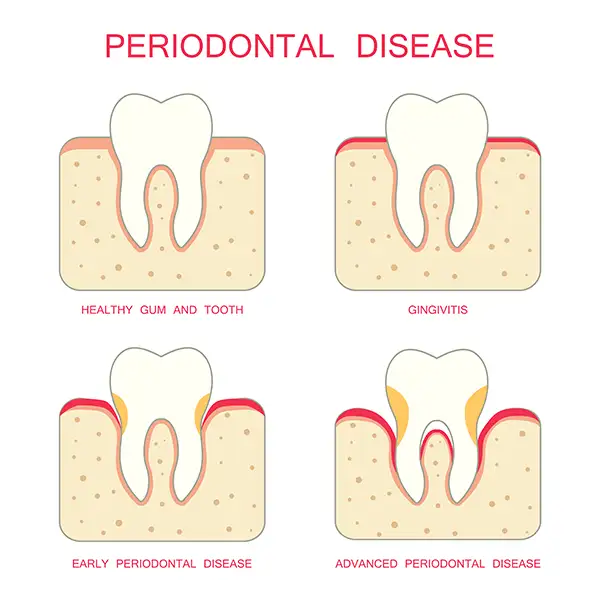 The early signs of gum disease are subtle, which is exactly why so many people miss them. Most are not painful in the way a toothache is painful. They are small changes that the brain learns to filter out over time. The early signs of gum disease are subtle, which is exactly why so many people miss them. Most are not painful in the way a toothache is painful. They are small changes that the brain learns to filter out over time.
- Bleeding when you brush or floss. The most common sign, and the one most often dismissed. Healthy gums do not bleed from normal brushing.
- Gums that look puffy or slightly red-purple. Healthy gum tissue is firm and a pale coral pink. Inflamed tissue looks darker, swollen, or rounded along the edges.
- Tenderness when eating crunchy or warm foods. A subtle sensitivity along the gumline that was not there before.
- Persistent bad breath that mouthwash does not fix. Bacteria below the gumline produce sulfur compounds that surface rinses cannot reach. Our team can help with persistent bad breath when it traces back to gum health.
- A subtle metallic taste. Often from small amounts of blood in the mouth that you may not have noticed otherwise.
- Food packing into the same spot repeatedly. A sign that the gum tissue between teeth has lost its tight contour.
- Gum lines that look slightly higher than before. Mild recession, sometimes exposing a thin band of yellower root surface.
- Mild cold sensitivity at the gumline. Caused by exposed root surface or thinning gum tissue.
- Small dark triangular spaces between teeth. Often noticed in photos or in the mirror before you notice it any other way.
If you can check more than one of these, it is worth scheduling a dental exam sooner rather than later.
What’s Happening in Your Gums
Understanding the underlying process makes the home care advice that follows much more compelling. The gums are not failing on their own. They are responding to a daily bacterial load.
Plaque is a biofilm of bacteria that begins forming on tooth surfaces within hours of cleaning. When that plaque sits undisturbed along the gumline, the bacteria release toxins. The immune system reacts with inflammation in an effort to neutralize the threat. That immune response is what you see and feel as the early signs above. The tissue swells, the small blood vessels become fragile and bleed easily, and the seal between the gum and the tooth begins to loosen.
If the plaque is removed daily and the bacterial load drops, the inflammation calms and the tissue heals. If it is not, the plaque mineralizes into tartar, which can no longer be removed by brushing. The bacteria migrate further down the side of the tooth into the early stages of a periodontal pocket, and from there the bone-loss process can begin.
This framing is the part patients often find clarifying. Gum disease is not really a disease of the gums alone. It is a relationship between bacteria and an immune response, and you have meaningful control over the bacterial side of that equation every single day.
Home Care That Actually Helps
 Most home care advice is correct but vague. Here is what actually moves the needle when early signs are showing up. Most home care advice is correct but vague. Here is what actually moves the needle when early signs are showing up.
Brush along the gumline, not just across the teeth. Angle the bristles at roughly 45 degrees toward the gumline and use small, gentle, back-and-forth or circular motions. Pressing harder does not clean better, and aggressive brushing can wear the tissue down further. Soft-bristled brushes only, ideally an electric brush if you have one.
Floss or use a water flosser every day. Brushing reaches the cheek and tongue sides of teeth. Flossing or water flossing is the only way to disrupt the plaque between teeth and just below the gumline, which is exactly where early gum disease starts. Many of our patients find a water flosser easier to stick with than traditional string floss.
Rethink your snacking pattern. Constant grazing keeps the mouth in an acidic state, which weakens enamel and supports the bacteria that drive gum inflammation. Structured meals and snacks give saliva time to neutralize and reset the mouth between exposures.
Pay attention to dry mouth. Saliva is one of the body’s natural defenses against gum disease. Many common medications reduce saliva flow. If your mouth feels persistently dry, mention it at your next visit so we can help you find ways to manage it.
If you smoke or vape, know the impact. Both significantly increase the risk of gum disease and slow healing once treatment begins. We never lecture about this, but we will be honest with you about what the evidence shows and what it means for your gums.
When to See Our Russellville Team
If you are noticing several of the early signs above, the next step is a comprehensive evaluation at Singing River Dentistry in Russellville, AL. We can measure the depth of the space between your gum and each tooth, take any imaging needed to check bone levels, and put together a plan that matches where you actually are, not where the worst case might be. Call our Russellville office at 256-332-6888 or visit our Russellville home page to request a visit and get this turned around early.
Frequently Asked Questions
Is it normal for my gums to bleed when I brush or floss?
No. Healthy gum tissue does not bleed from normal brushing or flossing. Bleeding is one of the earliest and most reliable signs that inflammation has begun. If your gums bleed regularly, it is worth scheduling an evaluation rather than waiting for it to clear on its own.
Can gingivitis really be reversed?
Yes. Gingivitis is the only stage of gum disease that is fully reversible. With a thorough professional cleaning and consistent home care, the inflammation usually calms within a few weeks and the tissue returns to a healthy state.
Does mouthwash treat gum disease?
Mouthwash can reduce surface bacteria and freshen breath, but it cannot reach the plaque and tartar that drive gum disease below the gumline. Brushing along the gumline, daily flossing or water flossing, and professional cleanings are what actually address the underlying cause.
How often should I see the dentist if I notice gum problems?
A standard cleaning interval is every six months, but if you are already noticing early signs of gum disease, an evaluation sooner is appropriate. After treatment, our team may recommend three- or four-month maintenance visits for a period of time to make sure the inflammation does not return.
Can gum disease come back after it has been treated?
Yes, which is why ongoing maintenance matters. Once you have had gum disease, you are at higher risk of recurrence, and the bacterial conditions that caused the original problem can return if home care and professional cleanings lapse.
|
|

